Toronto Real Estate Expert & Author

Selling Your
Toronto Home
The Right Way

What every seller needs to know before listing

Rosalin Smith-Carr is a trusted Toronto real estate professional at Johnston & Daniel Division, Royal LePage — and the author of the definitive seller's guide to protecting your equity, your momentum, and your peace of mind.

Rosalin Smith-Carr — Toronto Real Estate Professional
License Number#1838635
About Rosalin

A Trusted Guide for
Toronto Sellers

Rosalin Smith-Carr — Johnston & Daniel Division, Royal LePage

Selling a home is not just about numbers. It is about trust, timing, and choices that will ripple through your financial and emotional life for years to come. Rosalin Smith-Carr understands this deeply — and has dedicated her career to guiding Toronto homeowners through one of the most significant decisions of their lives.

At Johnston & Daniel Division, Royal LePage — Toronto's standard of excellence in real estate since 1950 — Rosalin brings a rare combination of market expertise, clear communication, and genuine care for every client she serves.

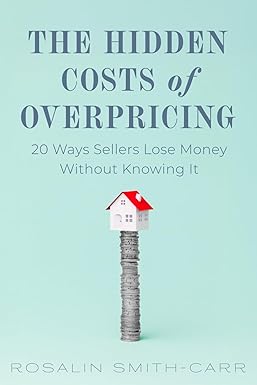
Her book, The Hidden Costs of Overpricing, distills years of hard-won experience and collaboration with Joe Stumpf of By Referral Only into clear, actionable guidance for every Toronto seller.

  • Licensed Real Estate Professional — License #1838635
  • Johnston & Daniel Division, Royal LePage — Toronto's #1 Luxury Brokerage
  • Published Author — The Hidden Costs of Overpricing
  • Serving the Greater Toronto Area with distinction
  • Committed to clarity, confidence, and strong outcomes for every seller
The Book

The Hidden Costs
of Overpricing

20 Ways Sellers Lose Money Without Knowing It

Most sellers believe that pricing high is safe — that they can always come down later. But the truth is the opposite. Overpricing drains momentum, triggers suspicion, erases buyers from search results, and quietly shrinks your net month after month.

In this book, Rosalin Smith-Carr — in collaboration with Joe Stumpf, founder of By Referral Only — walks you through 20 specific, real-world ways that sellers lose money without realizing it. This is not theory. It is the voice of thousands of transactions distilled into clear, actionable understanding.

All 23 Chapters

You only get one opening night. The moment your home first hits the market is the closest it will ever come to feeling brand new — like a curtain rising on a stage. If we set the price correctly, the show is a sellout. If we miss, the audience slips away and the energy is gone.

Those first 72 hours carry more weight than any other period in the life of a listing. Buyers who are serious have been watching the market every day with alerts set on their phones. When they see your home appear at the right price, they do not hesitate — they book a showing, they compete, they write strong offers. The leverage belongs to you. If the price is inflated even slightly, those same buyers scroll right past. That opportunity is gone in seconds, and they rarely circle back.

This is what I call the Day One Freshness Premium. Every home enjoys it, but only once. A new listing is scarce — it is one of one. That scarcity creates urgency, and urgency is what fuels top dollar. When buyers sense a home is new and well-priced, they lean in. They know they are not the only ones looking. That is when you see multiple offers, clean terms, and buyers waiving conditions. But if the price feels off, scarcity turns into suspicion and momentum dies.

Every day on the market tells a story. At three days: "This one is hot." At 30 days: "Something must be wrong." Once the market has judged your home as overpriced, the damage is done. Reductions do not bring momentum back — they signal weakness. Buyers do not say, "Great, now it is fairly priced." They say, "They must be desperate. Let's push harder." My commitment is that we will not waste your opening night.

Every home tells a story. Buyers read that story through photos, features, and descriptions — but there is one line they notice before anything else: the number of days on market. That number speaks louder than staging. Louder than marketing. Louder than any words I can write in a description. At three days, the story is "hot." At thirty days, the story is "cold." At ninety days, the story is "something must be wrong."

Buyers are human. They make quick judgments. When they see a home that has lingered, they assume a hidden problem — maybe it is overpriced, maybe there are condition issues, maybe the seller is difficult. None of those assumptions may be true, but the perception shapes behaviour. The longer your home sits, the more suspicious the market becomes. Suspicion lowers urgency, lower urgency lowers offers, and lower offers lower your net.

I worked with a couple who believed their home was worth more than the comparables suggested. We listed high. For the first two weeks, activity was flat. By day 45, the whispers started. By the time we corrected the price, the market had already judged. When an offer finally came, it was ten percent below even the adjusted price. The buyers knew the home was stale, and they used that knowledge. The sellers ended up accepting far less than they would have if they had started right.

Many sellers hope that cutting the price later will reset the clock. It does not. Buyers see both the days on market and the reduction history. Instead of saying "now it is fairly priced," they say "now they must be desperate." I want the story of your home to be one of excitement, urgency, and momentum. Days on market are not just a statistic — they are the headline of your story. Let us make sure that headline reads "hot."

When I sit with sellers, I often hear this hope: "Let's price high and see what happens. If someone is serious, they can make us an offer." It sounds reasonable. But here is what really happens — when buyers see an overpriced home, they do not rise up to meet it. They anchor low. Instead of writing an offer near your asking price, they drop it significantly below. They know you are out of line with the market, so they test you. That single misstep in pricing changes the entire tone of negotiation.

Anchoring is a psychological effect. The first number on the table sets the frame for the entire negotiation. If you start too high, buyers feel permission to start too low. They believe the gap must be bridged somewhere in the middle. Even if you lower your price later, their first impression lingers. To them, you are "that overpriced seller," and that label weakens you. I have watched this play out dozens of times — buyers coming in far below what they should have, simply because the list price was unrealistic to begin with.

Negotiation is always about leverage. When your price is accurate, you hold the stronger position. Buyers may try to nudge you down, but they know they are competing against the market and cannot push too far without losing the home. When you are overpriced, the balance shifts. Buyers sense you have few options. They believe your home is sitting because no one else wants it. That perception emboldens them — they press harder, ask for bigger concessions, demand more inspections, push for a later closing date.

Overpricing does not just hurt your wallet — it wears you down emotionally. When we price correctly, the psychology flips entirely. Buyers fear missing out. Instead of anchoring low, they stretch higher. They shorten conditions. They sweeten terms. They compete against each other. I have seen buyers write escalation clauses because they knew the home was fairly priced and did not want to lose it. That is the position I want you in — negotiating from strength, not weakness.

If your home is overpriced, you are not just failing to sell your own property — you are actively helping another seller close their deal. Buyers do not shop in a vacuum. They compare. Every weekend they tour two or three homes side by side, flipping between photos, features, and prices. When your home is priced too high, it becomes the measuring stick that makes other homes look like bargains. Instead of standing out, you stand aside.

Buyers are always weighing alternatives. They ask, "What else could I get for the same money?" If your price is inflated, the answer works against you. A buyer considering your home at a premium may look next door and see another home priced lower with a larger yard or an updated kitchen. Even if your home has unique strengths, the price blinds them. This is the contrast effect — the value of one item is judged in comparison to another. By overpricing, you set yourself up as the high anchor, and instead of attracting buyers, you push them into the arms of your competition.

I once watched this unfold when two nearly identical homes hit the market in the same neighbourhood. One was priced about five percent below market. The other insisted on listing ten percent higher. Buyers toured both. Almost every buyer chose the first. Within a week, the lower-priced home sold with multiple offers. The overpriced one lingered for two months and finally sold well below its starting point. By trying to gain extra at the start, that seller actually lost more than they ever imagined.

Another layer many sellers miss is how buyers' agents guide their clients. If they believe your home is overpriced, they may still show it, but their recommendation will be lukewarm while they speak enthusiastically about the better value nearby. Every time a buyer chooses the other listing, your leverage shrinks. Your ambition fuels your neighbour's success. I want your home to be the one buyers choose — not the one they use as a comparison point to justify buying something else.

When most sellers think about the cost of selling, they picture the commission, the staging bill, maybe the closing fees. What almost no one factors in are the real costs of simply holding on to a home.

These carrying costs continue whether the property sells or not. They include the mortgage, property taxes, insurance, utilities, and ongoing maintenance. They do not pause while you wait for the right buyer. They continue, month after month.

If your home costs even a few thousand dollars a month to carry, then every thirty days you hold on unnecessarily, you reduce your net by that amount, money you will never recover.

Overpricing creates the illusion that you are standing still, simply waiting. In reality, you are moving backward. Every month of delay is money spent with no progress toward your next step.

I once worked with sellers whose home cost them around three percent of the home's value each quarter to maintain. They overpriced and ended up waiting half a year before reducing. By the time the home finally sold, they had burned through nearly ten percent of their equity in carrying costs alone.

For many sellers, carrying costs do not exist in isolation — they are also buying their next home at the same time, meaning two mortgages, two tax bills, two sets of utilities. The stress is enormous. I have seen families drained financially and emotionally because they were covering both homes at once, a burden that overpricing doubled. It is easy to think, "If we just wait, the right buyer will eventually pay what we want." But buyers do not care about your carrying costs. The market sets value, and the longer you resist it, the more those costs eat your net.

Carrying costs rarely travel alone — they compound with other problems. The longer you hold, the greater the risk of a price reduction, a low appraisal, and lost momentum. The only way to stop the silent drain is to sell clean and fast. That requires pricing right at the start. Every day you hold an overpriced home, your net shrinks. The bills do not stop. The smart move is to price right and sell strong — before carrying costs drain away what you have worked so hard to build.

The market is not still. It moves every week, every month, every season. When you launch too high, you are not just waiting for the right buyer — you are chasing a moving target. Each week you delay, the gap between your price and the market widens. What begins as a small error grows into a much bigger loss. Imagine listing your home six percent above what the market supports. At first, the miss feels manageable. But while you sit, new sales close at slightly lower numbers. Suddenly your home is not six percent above the market — it is ten. Then twelve. The longer you wait, the steeper the drop you must make to catch up.

Many sellers tell me, "If the market shifts, we will just reduce." It sounds like control, but in reality you are always a step behind. By the time you adjust, the market has moved again. You are chasing, not leading. Buyers see this pattern. They sense your desperation — and they wait for the next drop. I have watched homes take three or four cuts before selling. Each reduction felt like a compromise. Each delay deepened the suspicion. And in the end, the seller's net was far below what it could have been if they had led with accuracy.

Buyers follow the market too. When they see a home that has been reduced once, they assume it will be reduced again. They think, "Why hurry? If I wait, the price will drop further." Instead of leaning in with urgency, they lean back with patience. This creates a dangerous loop — sellers reduce to spark action, buyers interpret it as weakness and wait longer, the home grows stale, and each new cut produces smaller and smaller ripples.

Every week of hesitation has a price tag — not only the carrying costs, but also the opportunity cost of missing the strongest buyers. The best buyers move early. They write strong offers for well-priced homes. When you are overpriced, you miss them. By the time you catch up, those buyers are gone, and what remains are the bargain hunters. True control does not come from adjusting late. It comes from launching right and leading the market, not chasing it.

When a home lingers on the market, buyers do not assume patience. They assume problems. Even if your home is beautiful and well maintained, overpricing can trigger what I call The Suspicion Loop. Buyers are constantly scanning the market — they see which homes come on fresh, which ones move quickly, and which ones sit. When they see a home that has lingered, their minds go to the same place: "Why has nobody bought it?" The human brain fills in blanks with doubt. Maybe the roof is old. Maybe there are hidden repairs. Maybe the seller is difficult. Suspicion breeds stories, and stories become the reality buyers act on.

The longer a home sits, the louder the suspicion grows. At ten days, buyers wonder. At 30 days, they assume. At 60 days, they are convinced. Even if nothing about the property has changed, the story in the marketplace has. The home shifts from opportunity to question mark. I once had buyers walk into a spotless home that had been listed for 50 days. Before they even looked at the kitchen, they whispered, "What's wrong with it?" The answer was nothing. The only issue was the starting price. But their suspicion shaped everything they saw — they inspected harder, asked tougher questions, and prepared to offer lower.

Here is how the suspicion loop works: overpricing leads to fewer showings, fewer showings create longer days on market, longer days trigger buyer suspicion, suspicion reduces offers or drives offers lower, lower offers confirm the seller's fear, they refuse them, and the cycle continues — feeding on itself until the home feels stigmatized. Suspicion also impacts agents. They become careful about steering clients toward homes that may come with hidden headaches, even if they cannot name the problem. That hesitation means fewer showings and weaker offers.

The only way to avoid the suspicion loop is to launch with accuracy. When your price matches the market, you eliminate doubt before it begins. You keep the story clean. Instead of "What is wrong?" the story becomes "We need to act fast." Suspicion is a shadow that grows with time. Once it appears, it is hard to shake. Let us price right from the start and make sure buyers compete with each other instead of questioning you.

Buyers are not just looking at photos and features. They are studying your history. Every online platform shows the timeline: when your home was listed, what price it launched at, and whether it has been reduced. That history becomes part of your story — and once you start reducing, buyers interpret the cuts as weakness. Instead of thinking, "Now it is fairly priced," they think, "This seller is soft. Let's push harder." The record of price changes becomes ammunition they use to negotiate against you.

Real estate used to be opaque. Today, every buyer carries the entire market in their pocket. With a few taps on their phone, they can see the listing history, the days on market, and every reduction. That transparency shapes their strategy. If they see you started high and cut once, then twice, they assume you are desperate. They come in with lower offers, confident you will concede again. Buyers are always looking for leverage — and when they see reductions, they feel empowered. They think, "We are not negotiating against the seller. We are negotiating against time. If we wait long enough, the price will keep dropping."

I once worked with sellers who insisted on starting 15 percent above market. After several weeks, we cut once. Then again. Then again. By the time we reached the right number, the home had three reductions recorded online. Every buyer who toured asked me about it. They assumed something was wrong with the property. In truth, nothing was wrong. The only mistake was the starting price. But the record of reductions had created a stigma that could not be erased. Even at the correct price, those buyers negotiated as though the home had a history — because it did.

You cannot correct history. Once the trail is visible online, it cannot be erased. Every cut leaves a scar. Every reduction tells a story. And once that story is written, buyers use it against you. The market is not only about perception in the moment — it is about narrative over time. A home that launches strong and sells quickly carries the story of confidence. A home that reduces again and again carries the story of struggle. One strong chapter beats a series of corrections every single time.

One of the hardest situations I see is when a seller is ready to move but their current home has not sold. They have already found the next house — they may even have an accepted offer. Suddenly, instead of carrying one mortgage, they are carrying two. Add in taxes, insurance, utilities, and maintenance, and the burden grows heavy fast. Most families do not budget for two full sets of housing costs. They expect to sell one before fully moving into the next. When the first home lingers because it is priced too high, the bills start stacking up: mortgage on the old home, mortgage on the new home, taxes on both, two sets of utilities, two sets of insurance.

I have seen sellers drained of savings within a few months of this double load. What was supposed to be an exciting transition became a stressful juggling act. They were writing cheques just to hold on, and each cheque was money they would never see again at closing. Overpricing sets this domino in motion: you launch high, showings are weak, offers do not come, time stretches, and meanwhile the purchase of your new home cannot wait. You move forward expecting the sale to catch up — but the gap widens.

Now you are paying for two homes, and the longer it lasts, the more desperate you feel. That desperation bleeds into negotiations. Buyers sense it. They offer lower and demand more concessions because they know you are exposed and they use it. Buyers do not care about your double mortgage stress. They do not say, "Let's offer more to help them out." They see your situation as leverage — and they use it to push harder.

The best way to avoid double mortgage stress is simple: sell clean and fast. That requires pricing right from the beginning. When we hit the market with accuracy, your home sells quickly. You move into your new home without the overlap of carrying two. You protect your savings, your equity, and your peace of mind. Overpricing turns one mortgage into two. It takes a joyful move and turns it into a financial grind. Price strong, sell fast, and free yourself to enjoy the home you are moving into — not worry about the one you left behind.

Getting an offer is not the finish line. It is only the halfway point. From the day we go under contract until the day we close, there are dozens of steps that must go right — the lender, the appraiser, the inspector, the title company, the buyers themselves. All of them are part of the process. When your home is priced correctly, the path from contract to closing is smooth. But when you overprice, the risk of a broken contract rises dramatically. Even if we find a buyer willing to sign, the deal is fragile. It can fall apart at any moment — and when it does, it costs you money, momentum, and reputation.

An overpriced home often attracts buyers who are less stable. They may stretch financially just to get the contract. They may come in with the idea that they can negotiate you down after inspections. They may rely on an appraisal that they hope will come in high enough to support the number. These are not strong foundations for a deal. The higher the starting price, the more cracks appear. Issues that surface during inspections become negotiating points in a stretched deal. The appraisal comes in short. Financing wobbles. What should be a confident closing turns into a minefield.

When a contract collapses, the damage is bigger than the immediate loss of that buyer. The home goes back on the market with a scar. Every buyer who sees the listing asks the same question: "Why did it fall out?" That suspicion lingers — even if nothing was wrong with the property. The next buyers assume you are vulnerable and write lower offers. They push harder on terms. And if the home sits longer, the cycle of suspicion and weakness deepens.

I have seen sellers blindsided after a contract failed. They had already celebrated, already planned their move. Suddenly they were back at square one. The disappointment was heavy. The best way to reduce the risk of a sale falling through is to price correctly from the start. A well-priced home attracts strong buyers who are financially prepared and emotionally committed. Their loans are secure. Their appraisals match. Their inspections are smoother because they know they are paying fair value. Price to close — and close once.

Selling is not a transaction. It is a test. You will not waste your Day One momentum. You will not let filters erase your home from the buyers who need to see it. You will not let days on market stain your story. You will not cut price in desperation or watch your net shrink quietly through time and carrying costs.

You will launch strong. You will price with clarity. You will create competition rather than suspicion. You will lead, not chase. You will move with confidence — and you will arrive at your next chapter proud of the decisions you made.

This is your home. This is your equity. This is your story. And you will not let it be diminished by shortcuts, hesitation, or fear.

Now that you have read these 20 truths, you understand what really happens when sellers overprice. You have seen how momentum can vanish, how suspicion grows, and how net quietly shrinks. You have also seen the other path — the one that creates urgency, competition, and strong offers that carry all the way to closing.

The question is not whether these ideas matter. You already know they do. The question is who will help you put them into action. That is why I gave you this book. I want you to see how I work. I believe sellers make their best decisions when they have clear explanations, not just promises. I do not want you to wonder what will happen or hope the market treats you kindly. I want you to know why we are making each move and how it protects both your money and your peace of mind.

I partnered with Joe Stumpf, who has coached thousands of agents across North America, to shape these insights into something practical for you. But I did not do it just to write a book. I did it because this is how I serve my clients every day. If you choose to work with me, you will not just get a sign on your lawn or a listing on a website. You will get a strategy that makes your home the one buyers notice, the one agents talk about, and the one families compete to own.

My goal is simple: to help you move from where you are to where you want to be — with confidence, strength, and dignity. Let us take the next step together. Let us sit down, walk through your goals, and design the plan that gets you there. You have read the book. You know the costs of getting it wrong. Now let us make sure you get it right.

I often ask my sellers a simple question: if your home does not even appear on a buyer's screen, how can they fall in love with it? Most buyers today do not shop by driving around — they shop with filters. They open their phone, type in a price range, and the computer shows only the homes within their budget window. If your price is set too high, you fall outside those filters. And once you fall outside, you vanish completely.

Every buyer has limits. When they search online, they set filters at their comfort level. That filter acts like a gate — homes on one side are visible, homes on the other side simply do not exist. If your home would sell cleanly at one price but you insist on listing higher, you are no longer showing up to the exact buyers best suited for your home. You can have the prettiest photos and the best staging in the city, but if you are outside the filter, you are invisible.

I once worked with a family whose home was priced too high. In the first two weeks, showings were almost silent. The buyers who could afford the higher price were comparing it against larger homes. The buyers who would have loved it at the right price never even saw it. By the time they agreed to reduce, their freshness was gone. Missing the filter is not a small thing. It is total invisibility — and it cannot be undone with better photography or more open houses.

My responsibility is to make sure your home lands in the sweet spot where your best buyers are searching. Your buyer is out there right now with a phone in hand, setting their price range. I want your home to appear on their screen, not vanish behind a filter. When we get this right, they will find you — and once they find you, they will fight for you.

Even if we find a buyer willing to pay an inflated price, the deal is not safe until the lender's appraiser agrees. The appraisal is a gatekeeper. If the numbers do not add up on paper, the lender will not fund the loan — and when that happens, the problem falls squarely on the seller. I have lived through this more times than I care to count. A seller holds firm at an ambitious price, a buyer falls in love and writes the offer, and for a moment it looks like we have won. Then the appraisal comes in low and the entire deal begins to wobble.

Appraisers are not swayed by emotion. They do not care about the view you raised your children looking at or the years of love poured into your garden. They are looking at comparable sales, square footage, location, and condition. When an appraisal falls short, it creates a gap that someone must fill — either the buyer brings extra cash, the seller reduces the price, or the deal collapses. Most of the time, the burden falls on the seller. I have watched sellers credit tens of thousands of dollars just to keep a contract alive, and that money comes directly out of their net.

Overpricing builds fragility into the process from the very beginning. Even if you convince a buyer to stretch, the appraisal is waiting down the line like a tripwire. And once it snaps, the leverage you thought you had disappears. The buyer knows the appraiser has sided with them. They sense power. Suddenly they ask for a lower price, longer inspection lists, more concessions. One appraisal problem rarely comes alone — if a deal falls apart, the home goes back on the market with a scar, and the next offer is often lower still.

I want you to win cleanly. I want you to celebrate when we accept an offer, not worry about what might unravel later. When we price your home in alignment with what appraisers will see in the data, we protect your equity and walk into closing with confidence that the deal will stick.

When I list your home, I am not the only one working to sell it. Every other agent who brings buyers into the marketplace is also a potential partner — and their enthusiasm matters more than most sellers realize. If other agents do not believe your home is priced correctly, they will quietly steer their buyers toward properties that are. I have seen this happen again and again. The home is beautiful. The photos are stunning. The location is prime. But the price is inflated, and because of that one misstep, showing traffic dries up. Agents stop talking about it. The buzz vanishes.

Enthusiasm is a chain reaction. When a home is priced right, agents talk about it in their offices, text their clients, show it first on tour day, and post about how quickly it might move. That energy multiplies, and suddenly the home feels like the centre of the market. When a home is overpriced, the opposite happens. Agents roll their eyes, skip it on tour, and when buyers ask about it, they respond with caution: "It is overpriced. Let's wait and see if it comes down." That subtle shift kills momentum before it even begins.

Buyers may not always know the data, but they sense the energy. They walk into a buzzing open house and feel urgency. They walk into a silent one and feel doubt. Silence creates suspicion — they wonder why no one else is interested. I once had a buyer tour a stunning home that had been listed too high. The rooms were empty. My client turned to me and whispered, "Why is nobody looking at this place?" They assumed something was wrong when the only problem was the price. That assumption shaped everything they did next — they inspected harder, asked tougher questions, and prepared to offer lower.

Real estate is a small world. A home that excites people becomes the subject of conversation. A home that lingers becomes a punchline. When I price a listing correctly, I want agents to tell each other, "That one will not last long." That phrase is gold. It drives traffic, sets expectations, and sparks action. Overpricing does not just cost money. It costs enthusiasm — and enthusiasm is what sells homes.

"Let's start high. If it does not work, we can always lower the price." On the surface, it sounds safe — you imagine protecting upside while leaving room to adjust. But in practice, this approach backfires. Price reductions do not reset momentum. They signal weakness. Buyers are always watching. They track days on market and notice every price change. When a reduction hits, they do not say "now it is fair." They say, "Something must be wrong. Let's wait for the next cut."

The reduction itself becomes a red flag. It tells the market your strategy failed. It tells buyers you misread demand. Instead of restoring energy, it drains it further. Think about the way buyers behave — if they believe you are dropping, they feel no urgency to act. Why buy today if tomorrow might be cheaper? I once represented sellers who launched about 15 percent above what was recommended. After three weeks of silence, they dropped by five percent. Buyers whispered, "They will go lower." They waited. When offers finally came a month later, they came in nearly ten percent below even the reduced price. What should have been a strong sale became a weak one because the market read every reduction as surrender.

Every reduction leaves a record. Buyers see the history online — listed high, cut once, cut again. Each step down tells a story of missed judgment. I have walked through homes with buyers who pulled up the price history on their phones while standing in the kitchen. "Look," they said, "it has already dropped twice." In their minds, that meant leverage. It meant room to push even harder. Sellers often feel comforted by the thought that they can always reduce later. But what is lost in that equation is the damage to momentum — you cannot reduce your way back to the energy of day one.

The only way to avoid the trap is to launch with accuracy. When your price matches the market, the market responds immediately. Buyers feel urgency. They compete. They stretch to win. A small error of five percent at launch can turn into a 15 percent loss months later after carrying costs pile on and buyer leverage grows. Price reductions are not a safety net. They are a signal of weakness. By launching strong, we never have to apologize to the market.

"If we price lower, are we leaving money on the table?" It is an understandable fear. But the truth is the opposite of what most people believe. Overpricing does not give you more — it almost always leaves you with less. A higher asking price feels like a shield that protects your equity. But in practice, it creates the exact opposite effect. The illusion of a big number masks the hidden leaks.

Here is how it unfolds. The home sits longer. Carrying costs pile up. Price reductions creep in. Low offers arrive. Buyers push harder. Appraisals fall short. Inspections get heavier. One by one, the small cuts eat into your bottom line. By the time you finally close, the cheque you take home is smaller than it would have been had you priced right at the beginning. Momentum is your greatest ally — when your home is priced correctly, buyers compete, agents spread the word, and energy fills your listing. Drag is your greatest enemy — when you overprice, drag sets in, the whispers start, and buyers circle rather than compete.

I once represented two different sellers in the same year. One priced their home at the market number. The other wanted to "try high." The first home sold in ten days with multiple offers, and the sellers walked away with a clean net above the list price. The second home lingered for four months, reduced twice, covered months of carrying costs, and had to settle for a tough appraisal negotiation. At the end, their cheque was significantly smaller than it could have been — not because of the market, but because of the starting price.

Contrast the overpriced seller — who ends up agreeing to inspection repairs, and a later closing date because they feel they have no choice — with the seller who launches at the right price. That seller's buyers waive conditions, shorten timelines, and give clean offers because they fought to win. The difference in net is staggering. A fair launch price does not leave money behind. It captures money you would have lost by dragging out the process.

Selling a home is not just about the house. It is about leverage. Whoever holds the leverage controls the terms, the pace, and ultimately the money on the table. When your home is priced right, leverage belongs to you. Buyers compete for your property. They stretch their offers. They waive conditions. They shorten timelines. They bring their best because they fear losing out. But when you overprice, the leverage flips — and the power shifts into the buyer's hands.

Leverage is not abstract. It shows up in the details of offers. When you hold leverage, buyers include escalation clauses, skip inspection requests, waive financing conditions, and offer flexible closing dates to match your move. When you lose leverage through overpricing, the opposite happens. Buyers write low offers, ask for their preferred closing date, demand long inspection periods, insist on financing conditions, and push for terms that serve them, not you.

Overpricing signals to the market that you are out of touch. Buyers sense it immediately. They think, "If this seller does not understand the true value, we have room to push." That assumption emboldens them. The moment buyers believe they have time and power, they use it — and the longer your home sits, the stronger that belief grows. By the time you reduce, the story is already written. You are the seller who missed, and they are the buyers who get to collect. The flip in leverage rarely stops with price. It spreads into every part of the contract.

The way to keep leverage is to create competition. Competition is only possible when the price is right. When buyers see value, they rush in. They fight each other, not you. And when they fight each other, you win. I want you to walk into negotiations with confidence, not defensiveness. I want buyers to adjust to you, not the other way around. Leverage is the real currency of real estate — protect it from day one.

When I prepare an open house, I want it to feel alive — buyers walking in and sensing the buzz, the sound of conversations, the energy of people coming and going. That energy matters more than most sellers realize. Buyers are not just evaluating your home. They are also evaluating how other people respond to it. A crowded open house sends the signal, "This is a home worth fighting for." An empty one whispers, "Something must be wrong." Overpricing is the single biggest reason open houses fall silent.

Buzz is contagious. When buyers walk into a room full of people, they immediately feel urgency. They sense competition. They ask themselves, "What do these other buyers see that I cannot afford to miss?" That urgency shapes their behaviour — they tour faster, ask better questions, and make stronger offers. When the open house is empty, the opposite happens. Buyers stroll slowly. They nitpick details. They wonder aloud why no one else is there. The silence feeds their suspicion. Instead of urgency, they feel freedom to wait — and that freedom lowers offers and slows negotiations.

I once hosted two open houses on the same weekend. Both homes were lovely and staged beautifully. The only difference was price. The correctly priced home had a steady flow of visitors all day — people lined up at the door, conversations filled the rooms, and by Monday morning we had multiple offers. The overpriced home was quiet. A handful of people trickled through, asked cautious questions, and left. We had no offers for weeks. The difference was not the homes. It was the energy. And the energy came from the price.

Silence does not stay in the open house — it ripples into the market. Online activity slows. Showing requests decline. Offers dry up. Each signal reinforces the same story: the home is overpriced. Open houses are not just about showcasing rooms. They are about showcasing demand. Overpricing drains that demand and leaves you with silence. Price right, fill the rooms, and let the buzz of competition work in your favour.

Timing is as important as pricing. The real estate market has rhythms — windows when buyers are most active, when demand is strongest, and when homes sell fastest. If we miss that window because of overpricing, we lose more than time. We lose the best opportunity to secure your strongest net. Every market has seasons. Spring often brings families who want to move before the next school year, with deadlines that push them to act and compete. Summer brings relocation buyers. Fall slows as the holidays approach, and winter can be quiet. When we launch during the right season at the right price, we ride the wave of energy and let the calendar work for us.

Think of timing like fruit on a tree. Pick it when it is ripe, and it is sweet. Wait too long, and it rots. A listing launched at the wrong price is like fruit left too long on the branch — by the time you correct, the best moment has passed. I once listed a home in the heart of spring. The seller wanted to start well above market value. We missed the first wave of spring buyers entirely. By the time we reduced, it was midsummer. Activity had slowed, urgency had faded, and the strongest buyers were already under contract elsewhere. The final sale closed in the fall, well below where it could have landed.

Spring buyers are the most decisive. They have deadlines — they need to move before the school year begins — and they often pay premiums to secure the right home. Summer buyers are motivated but have more flexibility and are less likely to overpay. Fall buyers are cautious and use the slower market to negotiate harder. Winter buyers are fewer. When you overprice in the strong season, you miss the very buyers who would have competed for your home. By the time you reduce, you are left with the more cautious buyers of the slower seasons — negotiating from weakness instead of strength.

Momentum in real estate is seasonal as much as it is situational. The first two weeks of a listing carry natural energy. Combine that with the right season and the right price, and you have maximum leverage. Miss that combination, and you are negotiating uphill. Every market has windows of opportunity. Overpricing slams those windows shut. Let us time your sale with care, price it with precision, and take full advantage of the season when buyers are ready to compete for your home.

Selling a home is not only a financial process. It is an emotional one. You are not just moving bricks and mortar. You are moving your story, your memories, your sense of home. That alone can feel heavy. Add overpricing into the mix, and the emotional weight multiplies. Overpricing does not just drain your equity — it drains your energy. It stretches the process longer than it needs to be. It fills your days with worry instead of momentum. What should feel like an exciting transition becomes a drawn-out grind that leaves you tired, frustrated, and sometimes resentful of the entire process.

When you first list, excitement runs high. You clean, you stage, you prepare. The sign goes up and you feel proud. But if the home is overpriced, that excitement fades quickly. Showings are slow. Feedback is lukewarm. Weeks pass, and the silence grows louder. I have watched sellers check their phones constantly for showing requests that never come. Each day that nothing happens chips away at their optimism. What started with joy turns into anxiety. Waiting is one of the hardest emotional states — it drains patience, fuels doubt, and steals joy.

Families live in limbo. Children are told to keep rooms spotless for showings that never come. Weekends revolve around preparing the house, even when no buyers show up. Tension builds. Conversations at dinner turn into questions about "why nothing is happening." The unknown is exhausting. Sellers who overprice wake up each day unsure of what will happen — and go to bed with the same question unanswered. That cycle of uncertainty wears down even the most optimistic people.

By contrast, when a home is priced right, the timeline is shorter and clearer. Showings start immediately. Offers come quickly. Sellers move from uncertainty to resolution in weeks, not months. The emotional difference is enormous. The silence of an empty open house or the sting of a lowball offer does not just affect the sale — it affects your sense of pride in your home. Price right, protect your energy, and let this move be a season you remember with pride, not fatigue.

Selling your home is not just about today's transaction. It is about tomorrow's opportunities. And when you overprice, you risk losing those opportunities. The hidden cost is not only in the money you give up through reductions or concessions — it is in the future doors that never open because you stayed stuck in the present too long. Overpricing extends the timeline of your sale. The home sits. Weeks turn into months. While you wait, opportunities pass by. The dream home you wanted gets scooped up by another buyer. The interest rate you hoped to lock in expires. The school year begins before you can relocate.

I once had sellers who overpriced their home while they searched for a new one. They found a property they loved, but their home had not sold. By the time they reduced and secured a buyer, the property was gone. Months later, they bought something else, but they told me with sadness, "We missed the one we really wanted." The cost was not just financial. It was emotional. Markets move quickly. Interest rates shift. A one percent increase in mortgage rates can mean hundreds more each month for your next home — and if you delay your sale because of overpricing, you may find yourself buying in a higher rate environment that follows you for years.

Timing your sale also impacts taxes, planning strategies, and retirement contributions. When you overprice and drag out your timeline, you may fall into a less favourable financial season. The lost opportunity is measured not only in money but in delayed freedom. Opportunity cost is not always about numbers — it is also about dreams deferred. That trip you wanted to take. That move you wanted to make before the holidays. That chance to be closer to children or grandchildren. Overpricing stretches the process until those dreams move further away.

The buyers who would have paid strong prices are not waiting around for you to reduce. They are buying other homes. When you miss them, you do not just miss one offer — you miss the competition that drives up your net. That competition is what funds your next move. Lose it, and you lose leverage on your future. Overpricing does not just cost money. It costs opportunity. Price right, sell strong, and open the doors to the future you deserve.

Each of these twenty truths is a safeguard. Together, they form your map.

✓ Protect your Day One Freshness Premium. ✓ Stay visible inside buyer filters. ✓ Guard against the stain of time on market. ✓ Price where the appraisal will confirm value. ✓ Avoid the low offer spiral by starting strong. ✓ Ignite agent enthusiasm, not silence. ✓ Don't sell the competition by making them look like better value. ✓ Refuse the price reduction trap. ✓ Factor in carrying costs as real money lost. ✓ Focus on your net at closing, not the asking number.

✓ Lead the market, don't chase it down. ✓ Keep leverage on your side. ✓ Break the suspicion loop before it begins. ✓ Fill your open house with energy, not silence. ✓ Protect your price history from scars. ✓ Launch inside the strongest seasonal window. ✓ Avoid the stress of carrying two homes. ✓ Protect your energy from the erosion of waiting. ✓ Build a contract that closes, not one that collapses. ✓ Count the opportunity cost — your future depends on today.

The path is simple: protect your momentum, protect your net, protect your next chapter.

Key Principles

What Every Toronto
Seller Must Understand

Six truths that separate sellers who win from sellers who wonder what went wrong.

01

You Only Get One Opening Night

The first 72 hours carry more weight than any other period in a listing's life. Serious buyers have alerts set. When your home appears at the right price, they act. Miss the window and the energy is gone — rarely recovered.

02

Filters Are Gates, Not Suggestions

If your price sits outside a buyer's search range, you do not exist to them. Beautiful photography and expert staging cannot overcome total invisibility. Precision pricing places you in front of exactly the right buyers.

03

Days on Market Tell a Story

At 3 days: "This is hot." At 30 days: "Something must be wrong." The number speaks louder than any description. Pricing to generate immediate action protects your story.

04

Reductions Signal Weakness

Every price cut is publicly visible. Buyers do not say "now it is fairly priced" — they say "they must be desperate." Each reduction teaches them to wait for the next one. Launching right makes reductions unnecessary.

05

The Net at Closing Is What Matters

A higher asking price almost always produces a smaller cheque. Carrying costs, concessions, and appraisal gaps quietly drain what overpricing promises to protect. Momentum builds your net — drag destroys it.

06

Leverage Belongs to the Right-Priced Seller

When buyers compete, they shorten timelines, waive conditions, and bring their best offer. When they sense an overpriced home, they probe for weakness. Leverage is the real currency — protect it from day one.

Common Questions

Questions Toronto
Sellers Ask

Selling your home is one of the most significant financial decisions you will make. Here are the questions Rosalin hears most often — with the honest answers every seller deserves to hear.

If you have a question not covered here, Rosalin welcomes a direct conversation. Call, text, or email — she is here to help.

Every price reduction is publicly visible online. Buyers interpret cuts as evidence of desperation — which emboldens them to offer lower and push harder for concessions. The home's best buyers act in the first days. By the time you reduce, they are gone. You are left negotiating from weakness with the buyers who waited you out.
This is the most common fear — and the data tells a different story. Accurate pricing creates competition. When buyers compete with each other, they stretch higher, waive conditions, and shorten timelines. The seller who launches at the right price and generates multiple offers almost always walks away with more net than the seller who started high and negotiated down.
Every new listing enjoys a unique window of buyer attention and energy — but only once. Serious buyers have alerts set for new properties. When your home appears at the right price, they act immediately. This first-72-hour period carries more weight than any other time in your listing's life. Rosalin's entire strategy is built around protecting and maximizing this premium.
Every month your home sits on the market costs you money — mortgage, property taxes, insurance, utilities, and maintenance. Depending on your home's value, carrying costs can quietly erode several percentage points of equity over just a few months. Fast and fair is not leaving money behind. It is refusing to leak equity while waiting.
You can reach Rosalin directly by mobile at 416.409.6896, by office at 416.489.2121, or by email at rsmithcarr@icloud.com. Johnston & Daniel Division, Royal LePage Real Estate Services Ltd., Brokerage — 477 Mount Pleasant Road, Toronto, ON. License #1838635.
Get the Book

Read It Before You List

The Hidden Costs of Overpricing gives you the knowledge to protect your equity, your momentum, and your peace of mind — before you make a single decision about your home.

Contact

Let's Talk About
Your Toronto Home

Rosalin Smith-Carr — Johnston & Daniel Division, Royal LePage

Whether you are thinking about selling now or planning ahead, Rosalin welcomes a conversation. Reach out directly — no forms, no automation, just a real professional ready to help.

📱
Mobile416.409.6896
Copied!
🏢
Office416.489.2121
Copied!
✉️
Emailrsmithcarr@icloud.com
Copied!
Rosalin Smith-Carr — Toronto Real Estate Professional
Brokerage & Professional Details

Johnston & Daniel Division
Royal LePage Real Estate Services Ltd., Brokerage
477 Mount Pleasant Road, Toronto, ON M4S 2L9

johnstonanddaniel.com ↗

License #1838635